Key takeaways
- Loot ESP should filter by value tier, not highlight every container on the map
- Economy phases need different ESP profiles than PvP rotation phases
- Pair loot visibility with player ESP distance limits to protect attention
- Seasonal economy shifts mean filter thresholds need occasional retuning
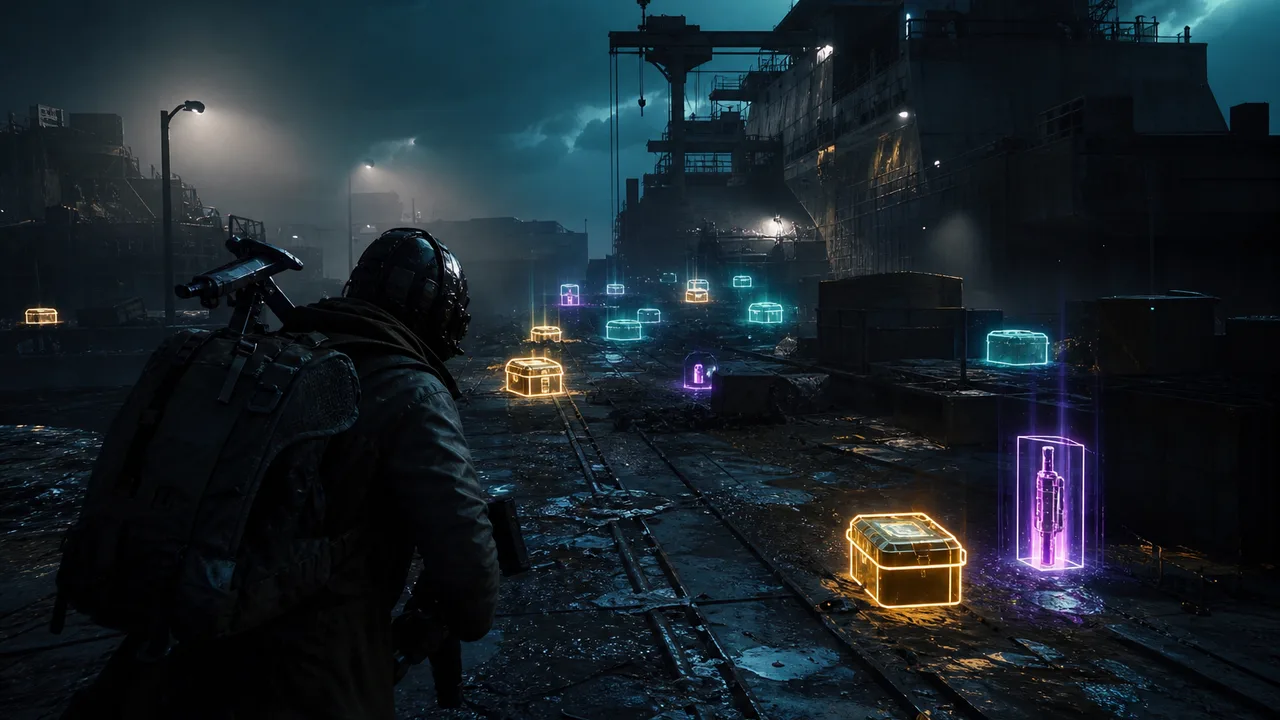
Loot ESP is where Arc Raiders players either accelerate their economy — or waste entire sessions chasing purple outlines that lead to grey-trash payouts and third-party ambushes. Extraction shooters live and die on value per minute, not value per map. Seeing every container within 200 meters feels powerful for ten minutes, then you realize you have been looting low-tier caches while a squad rotated to the high-value wing you ignored because your screen looked like a fireworks show.
Loot ESP done right is a filtering problem. You want enough visibility to route efficiently, enough silence to hear footsteps, and enough discipline to extract before greed turns a winning raid into a gear donation. This guide covers value thresholds, container priority, how loot overlays interact with player ESP, and why extraction economy context should dictate your settings — not a generic “enable all loot” preset from a random config share.
Why Loot ESP Matters More in Arc Raiders Than Raw PvP Tools
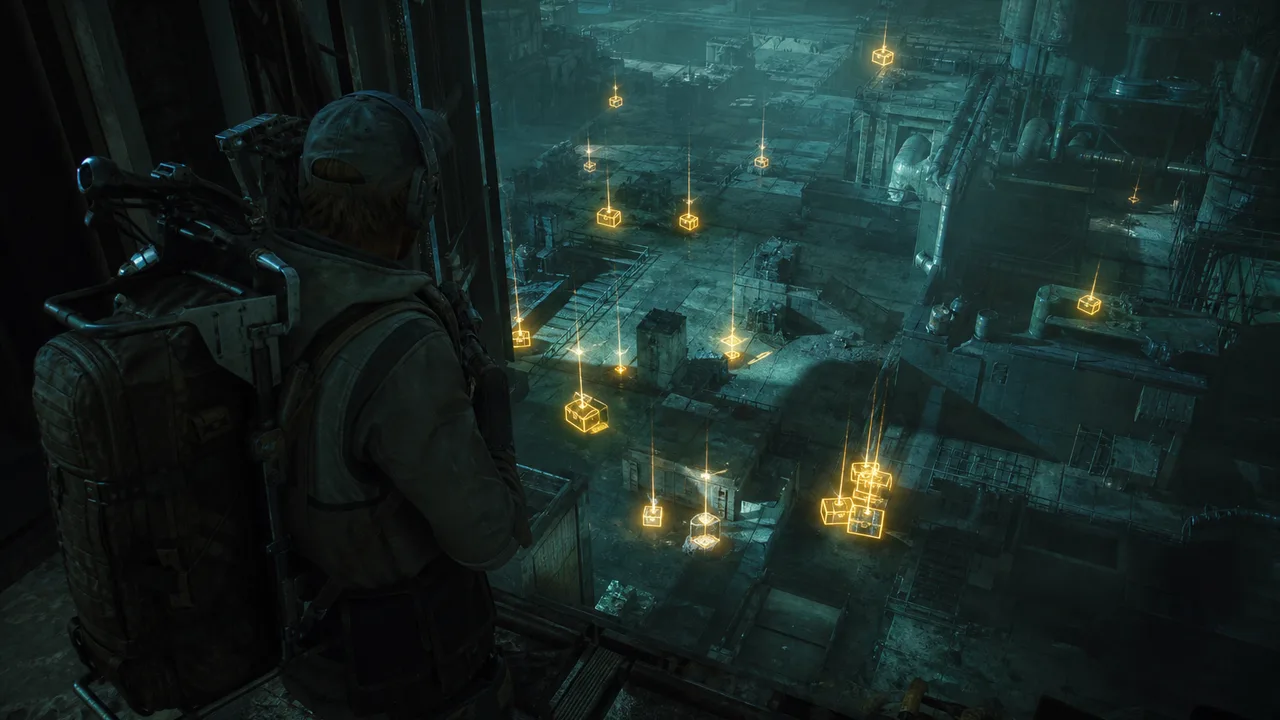
Arc Raiders raids are structured around risk budgeting. You enter with a loadout value, you accept PvE and PvP variance, and you leave with whatever you can carry before extract windows close or lobby pressure spikes. Player ESP protects your body. Loot ESP protects your time — the resource you cannot recover after a bad rotation.
Without loot visibility, players fall into predictable traps:
- Over-looting safe pockets while contested zones respawn high-tier caches
- Running past valuable tech crates because they look identical to junk containers in dim lighting
- Holding extract too long “just one more room” because nothing told them the nearby cache was low value
- Fighting for areas that do not pay for the ammo spent
Loot ESP does not remove risk. It clarifies which risks are worth taking. That distinction is what separates steady farmers from players who post huge single-raid clips and go broke the next three sessions.
If you are still building your overall awareness stack, start with the player ESP guide before you max loot categories. Information overload is the most common reason loot tools feel “bad” when the real issue is competing overlays.
Value Filtering — The Core Setting
Most Arc Raiders cheat menus expose loot value ESP with tier thresholds — common, uncommon, rare, epic, and similar buckets depending on patch naming. The correct default is not “show everything.” The correct default is show what changes your route.
Practical threshold philosophy:
| Session goal | Filter bias | Why |
|---|---|---|
| Quick solo farm | Mid-tier and above | Maximizes credits per minute without full-map noise |
| High-risk PvP route | High-tier only | Keeps eyes on players; loot markers are bonus reads |
| Quest / craft focus | Category filters if available | Tech and component tags beat raw color tiers |
| Squad split farm | One player runs broader loot ESP | Dedicated looter calls routes while others hold angles |
Raise your minimum value tier until the map feels almost quiet during a normal farm. Then lower one step — that is usually your sweet spot. If you only see two or three markers per compound, you can actually path toward them. If you see thirty, you will zigzag into bad fights.
Xray includes loot value ESP in its core package, which is why many entry-tier farmers never feel “blind” in compound runs. You do not need the full Pro combat stack to loot efficiently — you need clean filters and the patience to extract when filters say the area is drained.
Container Priority and Route Planning
Arc Raiders compounds are not equal. Loot ESP should reinforce route grammar — the sequence experienced players already know — not replace map learning entirely.
Think in layers:
- Anchor POI — your primary compound or wing for this raid
- Sweep path — linear movement that minimizes backtracking
- Extract corridor — how you leave without re-crossing hot zones
- Abort path — secondary extract or safe pocket if third party collapses your plan
Loot markers fit layer one and two. If a high-value outline sits outside your sweep path by more than a short detour, treat it as optional unless squad comms agree. Solo players cannot afford “optional” that turns into a 90-second fight.
Use loot ESP to confirm instincts, not invent random marathons. When a marker appears on a route you were already taking, that is a confidence boost. When it pulls you across open ground, cross-check player ESP and audio before committing.
The extraction ESP guide covers how to keep extract timing visible without letting exit markers compete with loot highlights. Extraction economy is not just what you pick up — it is what you survive carrying.
Loot Phases vs Fight Phases — Profile Switching
Professional farmers mentally split raids into phases. Your ESP should follow.
Loot phase profile:
- Tighter player ESP distance (you need immediate threats, not map-wide paranoia)
- Aggressive loot value filter (high tier only in hot zones)
- ARC drone overlays on if you are clearing PvE pockets
- Trigger and aim automation off if you run those tools — covered in triggerbot tips
Fight phase profile:
- Wider player ESP render
- Loot ESP minimized or high-tier only
- Radar layers on if you use them — see 2D radar guide
- Re-enable combat assists only when you expect contact
Toggle discipline beats one static mega-config. Arc Raiders fights are bursty; looting is rhythmic. A single profile forces compromises that hurt both activities.
Extraction Economy — When to Leave
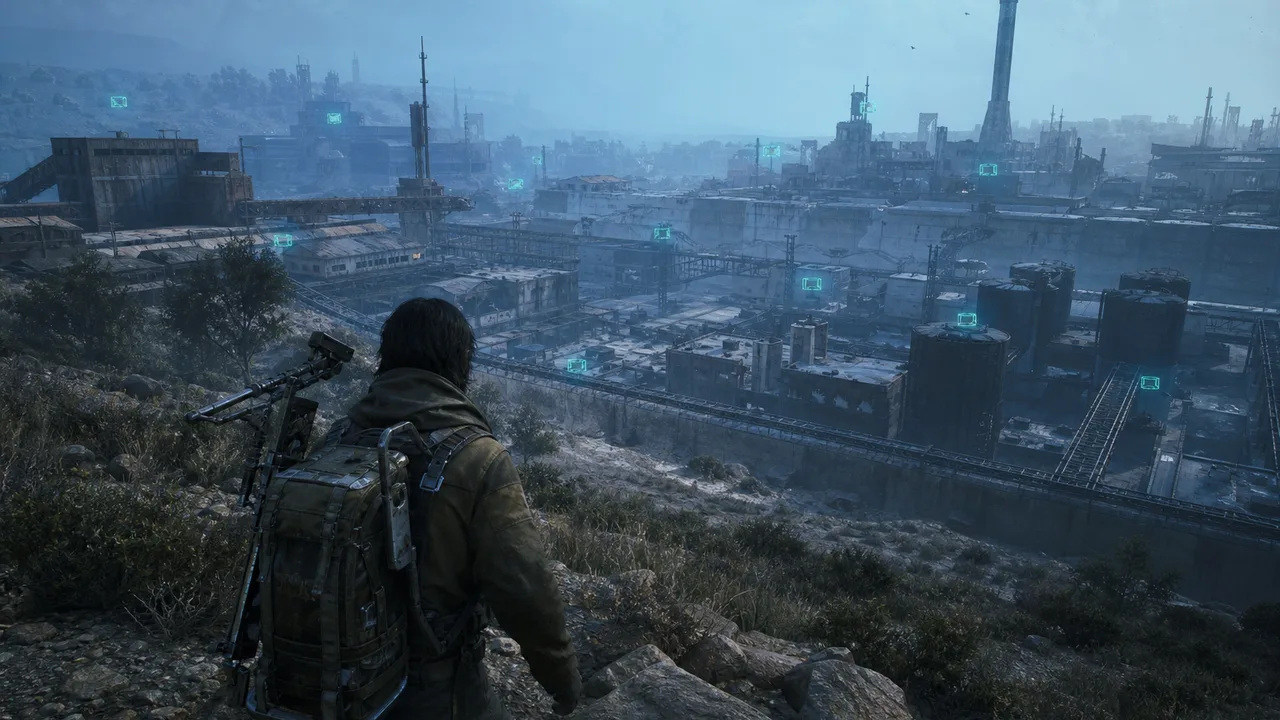
Loot ESP creates a dangerous illusion: there is always one more good cache. Extraction shooters punish that mindset harder than almost any other genre because unextracted loot is zero loot.
Use these exit signals:
- Marker density drops below your filter for two consecutive rooms — rotate out, do not scrape
- Player ESP activity increases near your sweep tail — someone is mirroring your route
- Timer pressure — seasonal events and lobby dynamics can compress safe extract windows
- Loadout capacity — high-value small items beat medium-value bulk when extract is contested
Seasonal meta shifts which items spike in demand. After balance patches, revisit what “high tier” means in actual trade value, not just color labels. The Season 1 meta analysis is a useful anchor for how reward structures and contest levels evolved — adapt filters when hot items change crafting margins.
Pairing Loot ESP With Player and ARC Overlays
Loot markers share screen space with player boxes, skeleton lines, drone ESP, and extraction pings. Color separation is non-negotiable.
Recommended separation:
- Players — cool white or red outlines
- Loot — gold or green value accents
- ARC drones — orange or cyan per your ARC enemy ESP preferences
- Extract — distinct purple or blue, always thinner lines than combat markers
When loot and player colors collide, players misread fights. You will aim at a crate outline while a raider crosses the same pixel cluster. That is not a skill issue — it is a config issue.
Distance limits apply to loot differently than players. Loot can render shorter — you only need to know what is in the next two rooms, not across the entire valley. Many strong farmers cap loot ESP at 50–80 meters indoors and 100–120 meters outdoors while keeping player ESP wider during contested routes.
Patch Cycles and Filter Maintenance
Developers adjust drop tables, container density, and POI popularity across seasons. Loot ESP menus stay stable; the map meta does not.
Common Loot ESP Mistakes
Showing all tiers “just in case.” You will case every locker and extract with mediocre payout.
Chasing cross-map markers. High-value pings off-route are often bait — map design or another player herding you.
Forgetting extract visibility. Loot without extract timing is half an economy tool. Xray covers loot value ESP for most solo farmers; add Pro only when PvP lanes intersect your routes.
Your Next Farm Session
Before you queue, set a value floor, a loot distance cap, and an extract time. Run one compound with loot ESP and minimal combat automation. Count how many markers you actually path to versus how many you ignore. If you ignore more than seventy percent, your filter is still too low.
Loot ESP should make Arc Raiders raids feel shorter and richer — not longer and louder. Filter hard, route linearly, extract on schedule. That is how extraction economy compounds across nights, not just how one highlight raid looks on paper.